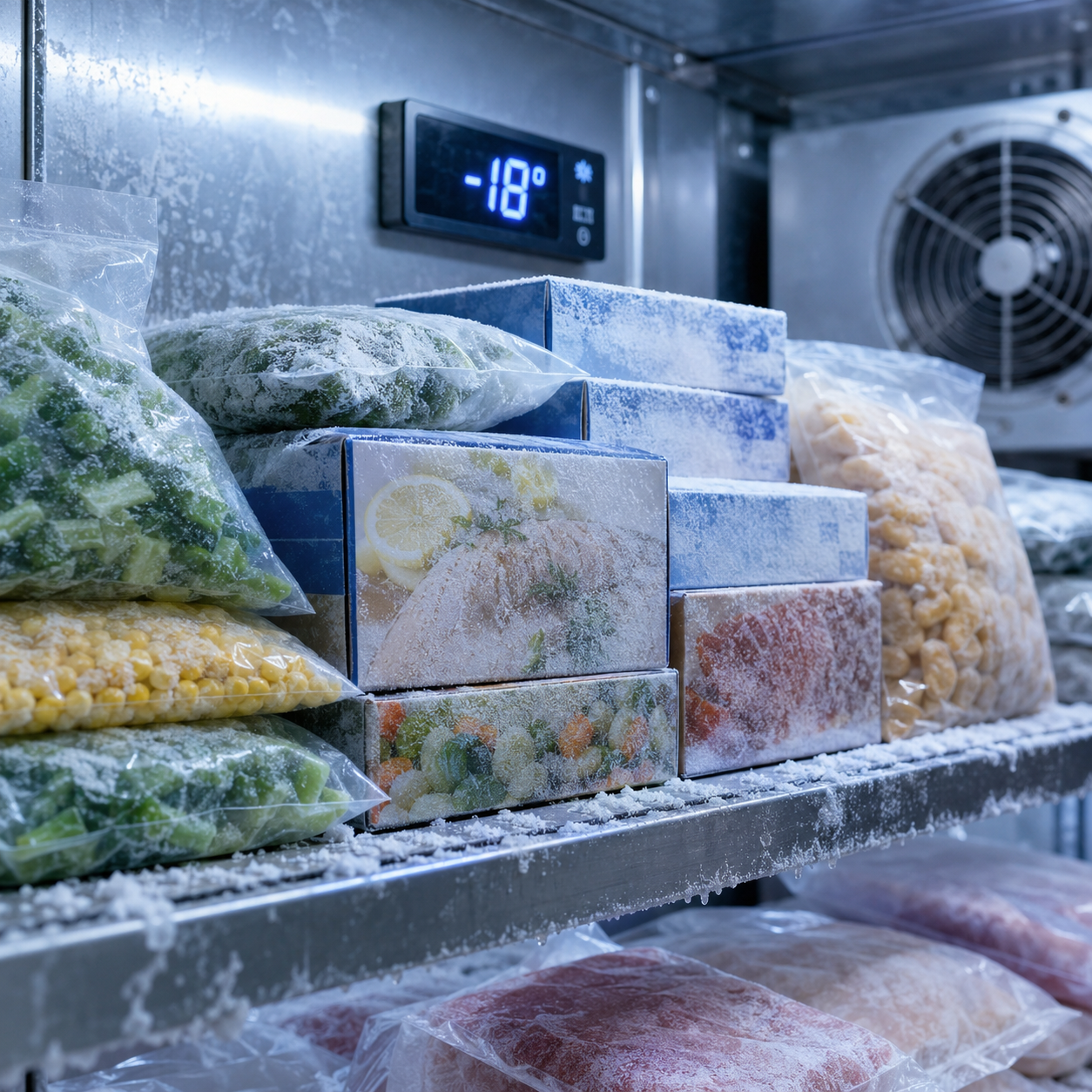
There is no room for error with a frozen product. Unlike chilled products, which can tolerate variations of a few degrees, the deep-freeze supply chain requires temperatures to be strictly maintained below -18°C at every stage. A single break in the chain, however brief, can trigger recrystallisation of the food, compromising its texture, flavour and microbiological safety, without this being visible to the naked eye.
Why sub-zero temperatures present a challenge in their own right
Positive cold storage (between 0°C and +8°C) is demanding. Negative cold storage (below -18°C) is even more so. The difference between the ambient temperature and the target temperature is much greater, which means that any equipment failure, any uncontrolled delay, or any poorly managed transfer immediately results in a rise in temperature.
European regulations (Regulation (EC) No 37/2005) require that frozen products be stored at a temperature of -18°C or below throughout the supply chain. Brief deviations down to -15°C are permitted during short-duration transport, but these must be documented and justified.
The 4 most common points of failure
The loading bay
Every minute spent in the open air between the cold store and the refrigerated lorry results in a rise in temperature. An incorrectly sized loading bay or a loading process that is too slow is a source of systematic disruption.
Multi-temperature transport
A single lorry can carry both frozen and chilled goods in separate compartments. Managing two different temperature zones increases the risks, particularly when the doors are opened during delivery.
Reception in the retail sector
Supermarket receiving areas are not always refrigerated. A product left for 20 minutes on an un-air-conditioned loading bay in the height of summer may exceed -15°C without anyone noticing.
The last kilometre
Home delivery of frozen goods is one of the most vulnerable links in the chain. Urban delivery vehicles are often opened and closed dozens of times per round, with each opening allowing warm air to enter the load compartment.
The invisible consequences of a break in the chain
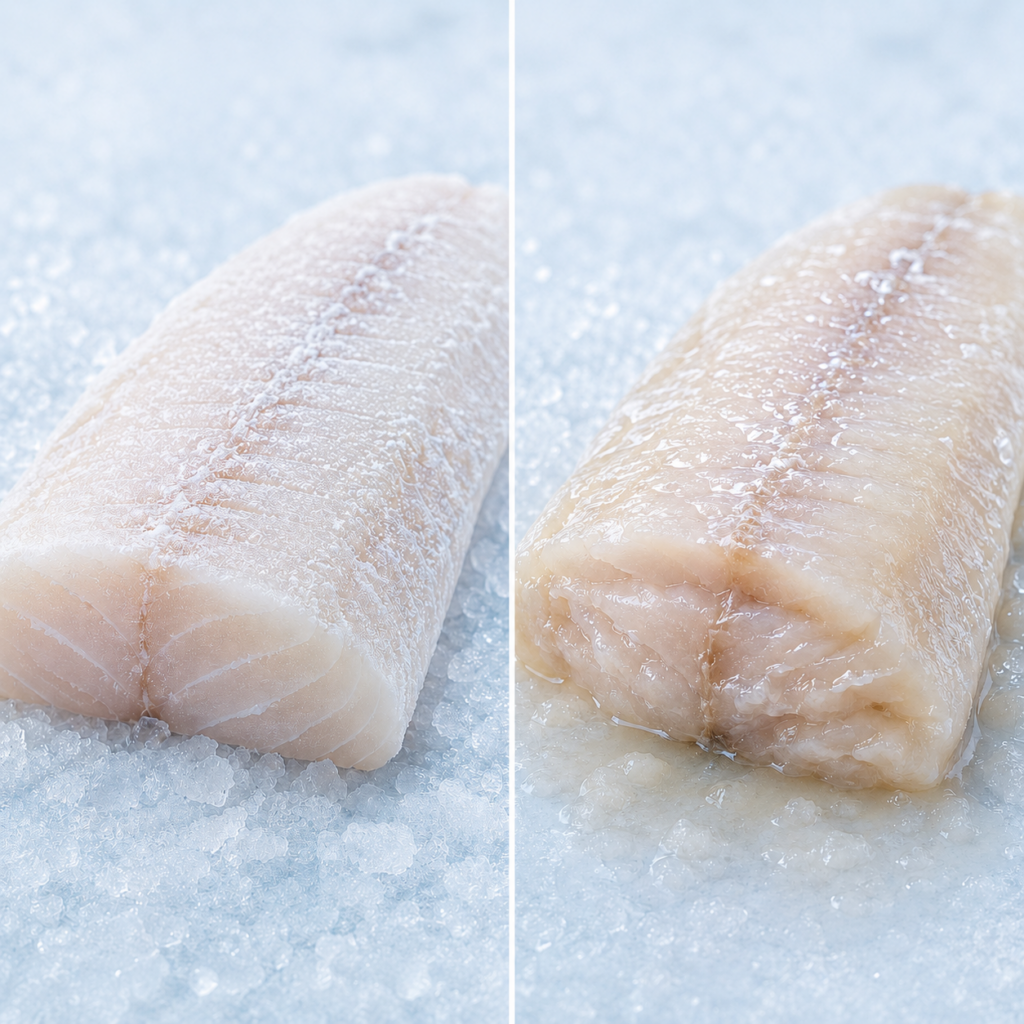
This is the key problem with negative freezing: a break does not necessarily show. A product that has been refrozen after a rise in temperature looks exactly the same as one that has never been subjected to a temperature excursion. However, its internal structure has changed.
Recrystallisation alters the texture of food: the ice crystals that reform are larger, piercing the food’s cells and impairing its organoleptic quality. Re-frozen fish loses its tenderness. Re-frozen meat becomes stringy. These changes are irreversible.
From a microbiological point of view, a rise in temperature above -10°C can allow certain bacteria to become active again. If the product is then reheated, the health risk can be eliminated. If it is eaten raw or undercooked, it may pose a real danger.
How to manage the deep-freeze cold chain
Mapping risk areas
Accurately identifying the stages at which the temperature may rise is a prerequisite for any control programme. Loading bays, transfer points, reception areas: each point must be assessed and, where possible, fitted with monitoring equipment.
Record continuously
A temperature logger fitted to each consignment provides a complete temperature history, from the dispatch warehouse right through to the delivery point. Without this history, it is impossible to prove compliance with the cold chain in the event of a dispute or an inspection.
Real-time alerts
For sensitive or high-value shipments, a real-time alert system enables action to be taken before the situation becomes irreversible: repositioning a pallet, speeding up a delivery, or triggering an emergency protocol.
Documenting for your own protection
In the event of a dispute with a distributor or a regulatory inspection, a comprehensive, time-stamped temperature log is the only indisputable proof that the cold chain has been maintained. Without such documentation, it is simply one party’s word against another’s.
Kelvin Solutions’ solutions for deep-freeze applications
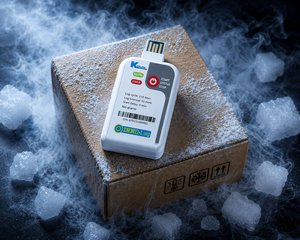
The Innolog™ Pro records up to 16,000 measurement points across temperature ranges suitable for sub-zero conditions, and automatically generates a PDF report upon completion. Compact in design, it fits easily into any frozen consignment, from industrial pallets to home delivery parcels. The Innolog™ Pro records up to 16,000 data points across temperature ranges suitable for sub-zero conditions, and automatically generates a PDF report once the device is switched off. Compact in design, it fits easily into any frozen consignment, from industrial pallets to home delivery parcels.
Innotrack™ adds a layer of real-time monitoring: instant SMS and email alerts as soon as a deviation is detected, shipment tracking and access to data via a secure cloud. Ideal for high-value-added shipments where every minute counts.